新闻文章

QIMA 2026 Q2 Barometer: After a Strong Start, Hormuz Closure Raises Sourcing Risks

2026-04-14

TL;DR

Global supply chains entered 2026 with renewed momentum – until the March closure of the Strait of Hormuz tested that resilience. Although shipping routes have adapted, energy shortages across South and Southeast Asia and fresh US trade probes are reshaping sourcing strategies faster than many buyers expected. This barometer, informed by QIMA's aggregated data on product inspections and factory audits, reviews the latest developments in consumer products sourcing, and what they mean for procurement strategy in Q2 and beyond.

Key Takeaways

  • Hormuz closure dented March momentum, but the real Q2 threat is energy exposure across South and Southeast Asia, not container delays alone.

  • US buyers pressed on with their shift away from China, even as fresh trade probes targeted the very Asian markets they’re shifting toward.

  • China remains the anchor of global sourcing, supported by rising demand from Europe and emerging markets despite softer US volumes.

  • Europe’s “China plus” strategy is taking shape: expanding Mediterranean nearshoring while keeping China as a core offshore base.

Listen to our Supply Chain Soundbites podcast for a 5-minute breakdown on the Hormuz closure and Q2 sourcing risks.

QIMA Supply Chain Snapshot

Key data points from Q1

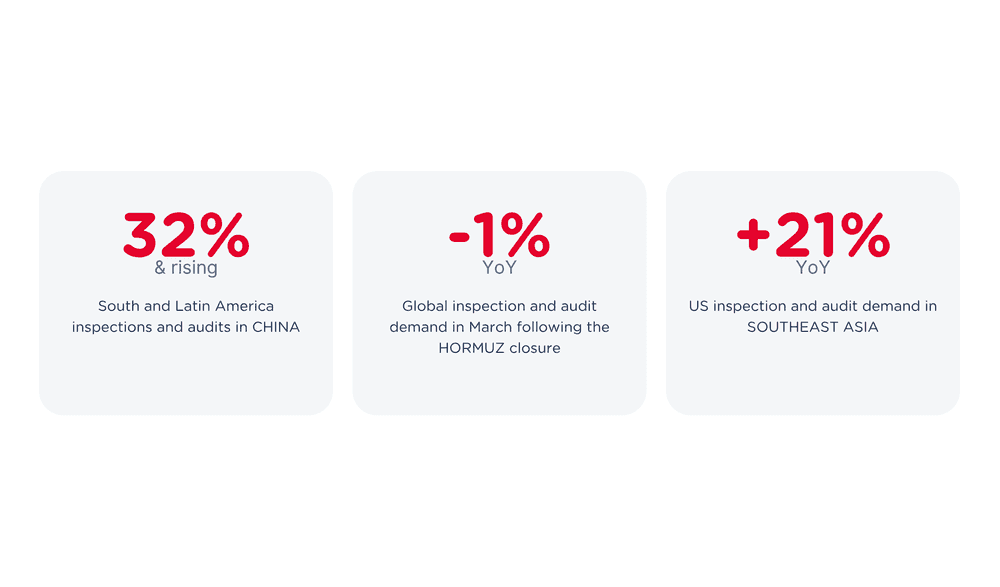
  • -1% YoY: global inspection and audit demand in March following the Hormuz closure

  • +21% YoY: US inspection and audit demand in South and Southeast Asia

  • 32% and rising: South and Latin America inspections and audits in China

Top risks to watch in Q2

  • Asia energy crunch

  • New US trade probes

  • Rising supplier selectivity

Hormuz Closure: Slow-Burn Supply Shock for Consumer Goods Supply Chains

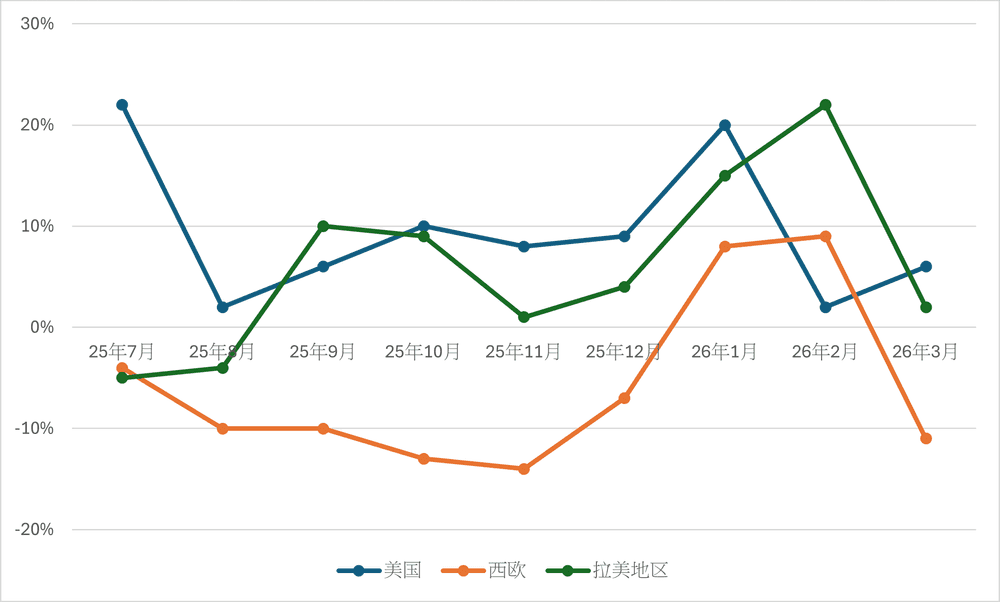
After showing unexpected resilience in 2025 – reflected in QIMA’s previous reporting and confirmed by McKinsey’s latest analysis of global trade flows – supply chains entered 2026 with momentum, but a strong January and February gave way to a sudden March stall. QIMA's global inspection and audit demand rose +15% YoY in January and +11% in February, before sliding -1% YoY in March. EU buyers led the drop (-11%), while Latin America’s demand flattened after two months of double-digit growth. While Lunar New Year seasonality played a role, timing aligns closely with the Strait of Hormuz shutdown, prompting order delays, booking suspensions, and broader uncertainty.

Shipping disruption proved serious but contained. Freightos reported widespread booking suspensions in early March, yet container flows have largely resumed via alternate routes. Higher transport costs and reduced air-freight capacity, however, will continue to pressure import volumes.

The bigger threat is energy, not shipping. Many manufacturing hubs across South and Southeast Asia depend on Middle Eastern fuel imports, and textile and apparel suppliers in Bangladesh and parts of India are already reported to be operating under capacity. Vietnam, Cambodia, Thailand, and Indonesia also face rising energy costs and localized supply constraints – pressures that are likely to surface in QIMA's Q2 data.

Fig. 1. Inspection and audit demand in key sourcing regions, YoY growth (monthly trend)

Source: QIMA inspection and audit data

US Trade Probes Cast Shadow Over Supply Chain Diversification

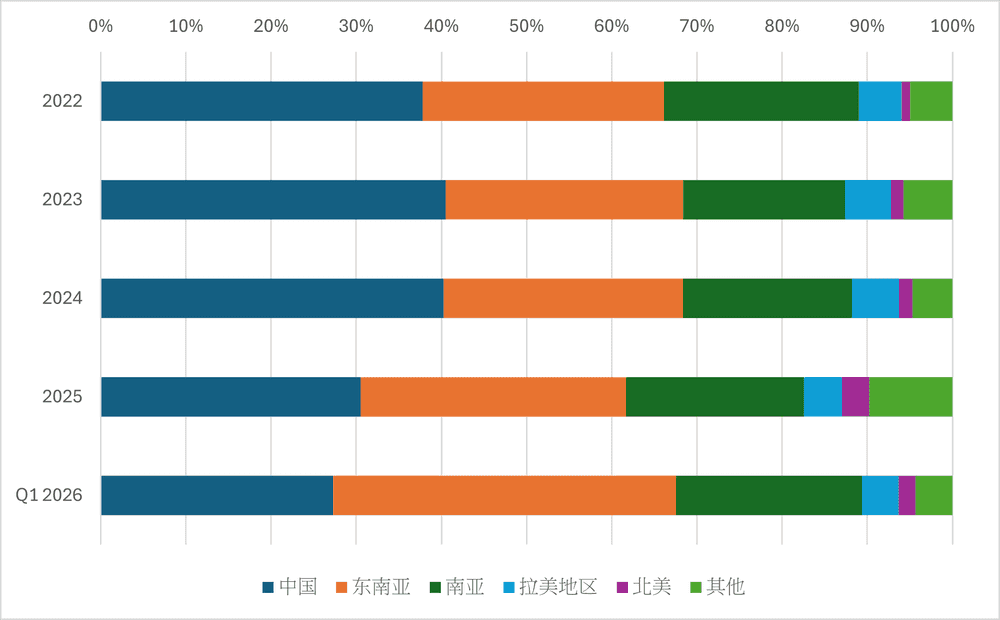
QIMA inspection data shows that China's share of US sourcing fell to 27% in Q1 2026, down from 30% in full-year 2025, while demand jumped +21% YoY across South and Southeast Asia, led by Vietnam (+61%), Cambodia (+26%), and India (+33%). Together, these markets accounted for over 60% of US consumer goods sourcing in QIMA data.

In March, Washington launched Section 301 probes into several of the same Asian markets that now underpin US sourcing – destinations buyers chose in their shift away from China. If new duties follow, they risk undermining recently negotiated trade arrangements and adding fresh policy uncertainty to supply chains that have already absorbed significant transition costs.

Meanwhile, reshoring remains limited in practice. QIMA's 2026 sourcing survey found US respondents were three times more likely to switch between overseas suppliers than bring production home. QIMA inspection data backs this up: with reshoring at just 1-3% of total US consumer goods sourcing, buyers may be left with few scalable alternatives if Asian sourcing comes under further pressure.

Source: QIMA data on inspections and audits

Southeast Asian Suppliers: Capacity May Become a Seller's Market

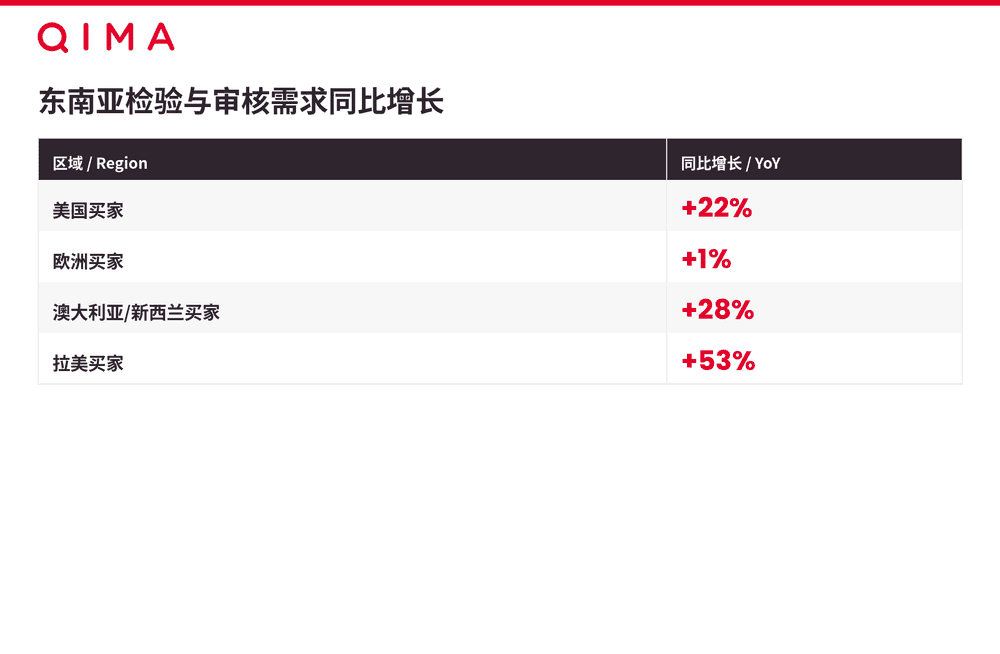
QIMA inspection and audit data suggests that Southeast Asia's supplier base is becoming less dependent on the US. While US buyers still represent 51% of Southeast Asian inspection volumes, demand from Latin America surged +53% YoY in Q1 2026, and buyers from Australia and New Zealand registered +28% YoY growth. As Washington's trade policy grows less predictable, suppliers now have a growing pool of alternative customers.

With key manufacturing hubs including Vietnam and Bangladesh exposed to Middle Eastern energy supplies, capacity constraints may intensify in the coming weeks or months. In that environment, suppliers may become more selective about their buyers – and US trade policy unpredictability may put American buyers at a disadvantage.

That selectivity could prove costly: if Asian suppliers begin prioritizing customers seen as more stable or commercially predictable, US buyers may face higher prices, tighter capacity, and hard choices – including shifting some orders back to China.

China Supply Chain Strategy: Restructuring, Not Retreating

China’s buyer base is expanding even as Western sourcing shifts, QIMA data suggests. Despite a -7% YoY drop in US-based demand, global inspection and audit demand in China rose +8% YoY in Q1 2026, with emerging markets driving the growth: Africa (+11%), Middle East (+28%), Eastern Europe (+45%), and South and Latin America (+8%).

Buyers from South and Latin America accounted for 32% of QIMA inspections and audits in China in Q1 2026, overtaking the EU for the first time in QIMA data – and the trend appears structural rather than opportunistic. Demand grew year-on-year in Mexico (+10%), Argentina (+6%), and Guatemala (+32%), with gains spread across textiles, homewares, toys, and food-contact products. Combined with China's December 2025 policy paper positioning Beijing as the region's long-term partner in science, technology, and strategic sectors, this broadening presence suggests a deeper sourcing shift rather than a temporary substitute for weaker Western demand.

Q2 Outlook: Asia’s Energy Crunch Could Redraw the Sourcing Map Again

As global supply chains enter Q2, diversification remains the defining trend of the past two years – and a key source of resilience. By spreading risk across more markets, buyers and suppliers were better able to absorb the tariff shocks of 2025.

Still, resilience has limits. If the Strait of Hormuz closure persists and Asia’s manufacturing hubs face a prolonged energy squeeze, buyers may have to redraw sourcing strategies again. Supply chains enter this period better prepared than in past shocks, but new policy and energy risks could still drive rapid change.

分享到